
Proudly serving the Greater Northern VA area
Spray Foam Insulation Before & After Photos
Click on a photo to enlarge.
Dumfries VA spray Foam HVAC Duct Interchange


This Dumfries VA home was having comfort issues that the homeowner wanted to eliminate. They called us to come and help. Our Home Performance Sales Pro Carl completed a no cost inspection of the whole home and identified a need for some work to be done in the attic which would help improve the comfort and energy efficiency of the home. In addition to air sealing and installation of new Tru Soft cellulose insulation, Carl recommended having the HVAC duct sealed with spray foam at different points where joints and exchange boxes were allowing conditioned air to escape.
Dumfries VA homeowner spray foam
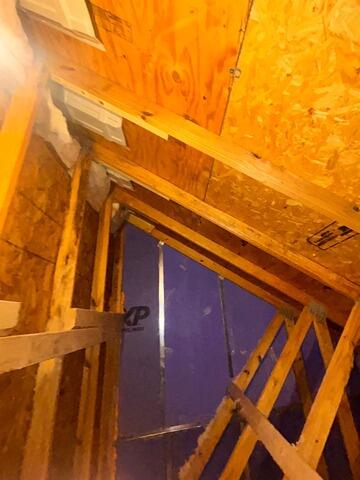
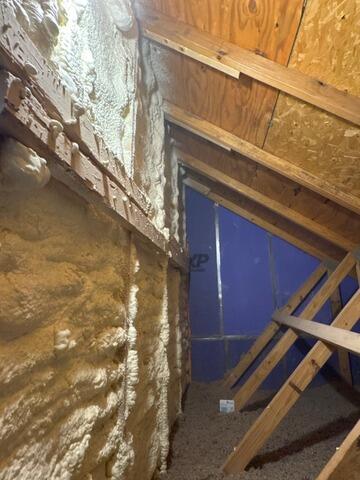
Dumfries VA homeowner wanted spray foam insulation in their attic area.
Vienna Virginia HVAC Ducts Spray Foam


An unprotected HVAC duct system can leave you with an uncomfortable home and higher energy bills than you should have. Conditioned air, heated or cooled by the HVAC system is intended to pass through HVAC ducts to get to the different rooms in a home. If the temperature in an attic is 125 degrees in the summer, the cold air trying to move through the HVAC duct is in a hostile environment. Same idea in the winter. If it is 25 degrees in an attic, the 74 degree heated air trying to pass through the HVAC ducts is fighting to stay warm. Insulating ducts with spray foam helps protect that air and eliminates air leakage at joints and turns in the duct system. The insulation wrap that had been used to try and protect this duct systems was eaten through by rodents and had multiple holes and tears.
Basement humidity control- Vienna, VA


This homeowner was finishing their basement and wanted to make sure that during the construction process he did something to better control the humidity in his basement.
Closed cell spray foam was the answer that Comfenergy provided.
Vienna Va Spray Foam Insulation HVAC Duct


In the summer, attic temperatures can reach over 120 degrees. In the winter, attic temperatures can drop to below freezing. Trying to pass cold air through a 120-degree metal HVAC duct in the summer just won't work well and moving heated air through a cold metal HVAC duct in the winter will not either. this can cause an HVAC system to run more often than it should, increasing energy costs and leaving homeowners with rooms that are less comfortable than others. We removed the existing insulation in this attic in order to expose the full HVAC duct system so that it could be encapsulated with Spray Foam. This will protect the conditioned air traveling inside.
our service area
We serve the following areas
- Amissville
- Berryville
- Bluemont
- Boston
- Boyce
- Brandy Station
- Burr Hill
- Castleton
- Chester Gap
- Clear Brook
- Cross Junction
- Culpeper
- Delaplane
- Elkwood
- Farmville
- Flint Hill
- Front Royal
- Gore
- Hume
- Huntly
- Jeffersonton
- Lignum
- Linden
- Louisa
- Markham
- Marshall
- Middletown
- Mineral
- Mitchells
- Orange
- Paris
- Purcellville
- Rapidan
- Remington
- Rhoadesville
- Rixeyville
- Round Hill
- Stephens City
- Stephenson
- Stevensburg
- Unionville
- Upperville
- Warrenton
- Washington
- White Post
- Winchester
